
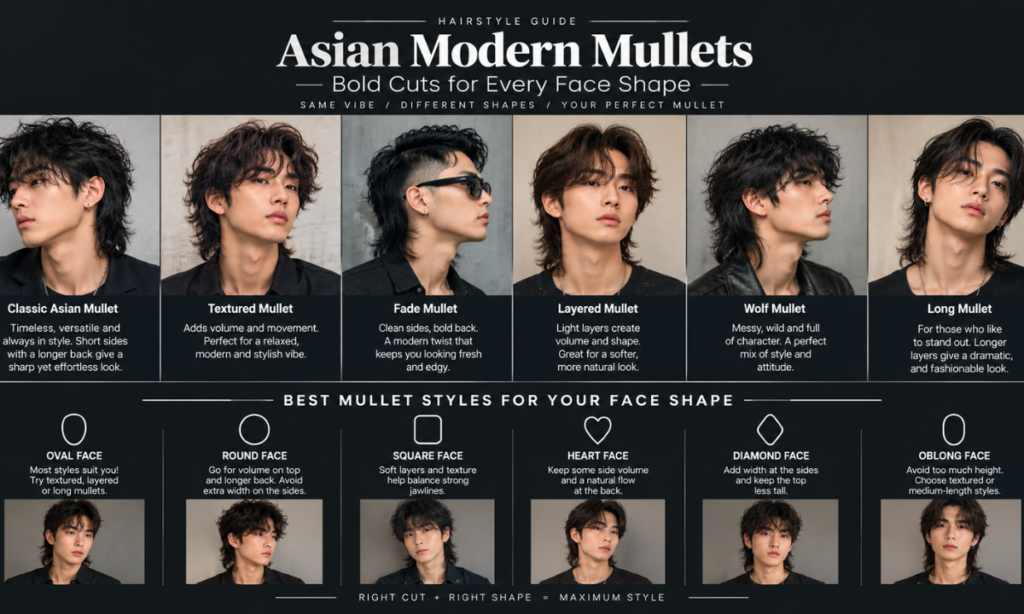
Asian modern mullets have moved from a risky street style to one of the most requested haircuts at barbershops. The cut keeps the sides short and the back longer, but today it is blended, textured and far less harsh than the 1980s original. Asian hair is usually thick and straight, so it holds layers and sharp shapes well.
This guide covers 40+ Asian modern mullets, which face shape each one suits, and how to style and maintain them.
Which Mullet Suits Your Face Shape?
Pick the cut for your face shape first, then choose the finish.
| Face Shape | Best Mullet Style | Why It Works |
| Round | High fade, spiky or volume-boost mullet | Height on top makes the face look longer |
| Oval | Almost any cut | Balanced proportions suit every style |
| Square | Textured or layered mullet | Soft layers soften a strong jaw |
| Long | Side-swept or curtain bangs mullet | Fringe and softer sides add width |
| Heart | Low taper or soft layered Korean mullet | Fuller layers balance a narrow chin |
| Diamond | Shaggy or tousled mullet | Texture adds width at the forehead and jaw |
Classic Asian Modern Mullets
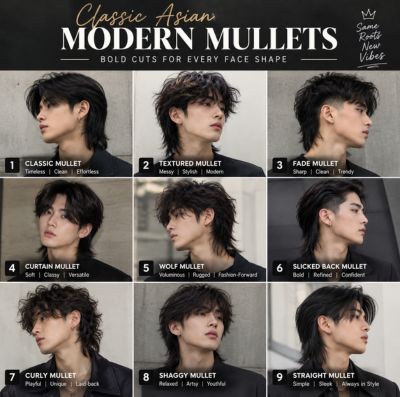
Classic Asian modern mullets are the easiest starting point. They keep a clean outline, a smooth blend and a modest length at the back.
Layered Modern Mullet
Soft layers run from the crown to the nape. This is a safe, wearable choice for office and everyday life.
Low Taper Mullet
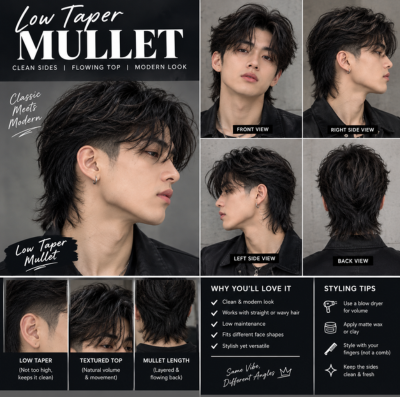
The sides taper gently just above the ear and neckline. It looks neat and grows out well.
Mid Fade Mullet
The fade starts around the temple. It balances a sharp look with a visible length contrast.
High Fade Modern Mullet
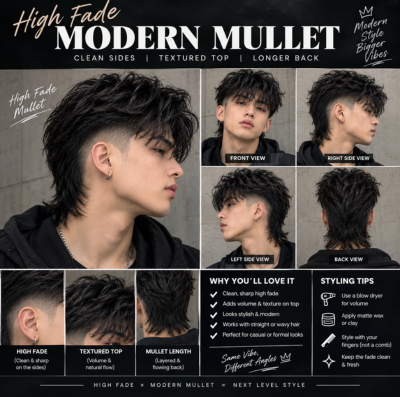
The skin fade rises high on the sides, so the top and back stand out more. It suits round faces especially well.
Taper Fade Mullet
Hair shortens gradually toward the neck without going down to the skin. It is the lowest-maintenance fade option.
Textured & Messy Styles
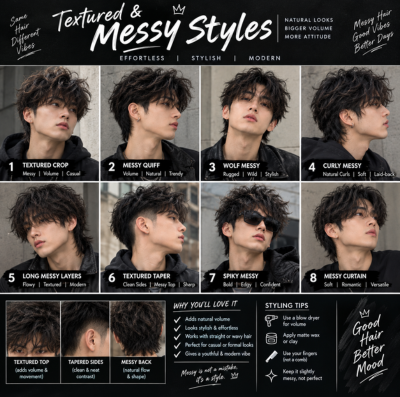
Texture is where Asian modern mullets really work. Thick strands respond well to cutting techniques like point cutting and thinning.
Textured Asian Mullet
Point-cut ends create separation and movement. Matte clay finishes the look.
Messy Modern Mullet
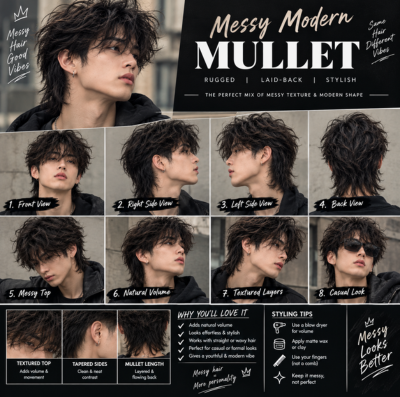
This is a lived-in, no-effort finish. Towel-dry, add sea salt spray and leave it alone.
Shaggy Asian Mullet
Heavy layers and uneven lengths give a rock-inspired shape. It flatters diamond and square faces.
Choppy Mullet
Sharp, cut-in sections make the ends look broken up on purpose. It adds edge without extra length.
Tousled Mullet
Loose, slightly disordered strands fall naturally. A light cream works better than strong gel.
Volume Boost Mullet
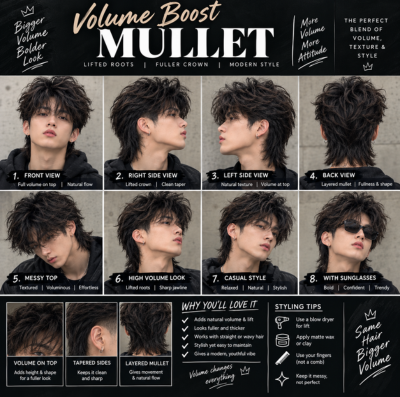
Short layers at the crown lift the top. Round and long faces get the most from this one.
Korean & Trendy Styles
Korean salons have shaped many of today’s Asian modern mullets. Expect softer lines, face-framing fringe and a polished finish.
Korean Modern Mullet
Wispy layers, a soft fringe and a tapered back define it. It looks smooth rather than rugged.
Curtain Bangs Mullet
Center-parted bangs frame the face and soften a wide forehead or strong jaw.
Two-Block Mullet
The sides and back are cut short, while the top stays longer. It is a staple of Korean men’s grooming.
Idol-Inspired Mullet
Inspired by K-pop stars, this cut combines layers, fringe and a gloss finish. It needs daily styling.
Soft Layered Korean Mullet
Feathered layers blend gently into the nape. It suits heart-shaped and oval faces.
Side-Swept Mullet
The fringe sweeps to one side. This lengthens round faces and adds balance to long ones.
Undercut Mullet
The sides are cut very short and the top and back stay long. The contrast is bold.
Disconnected Mullet
There is no blend between the short and long sections. The hard line makes it a fashion statement.
Burst Fade Mullet
The fade curves around the ear in a semicircle. It highlights the back length.
Punk Asian Mullet
Jagged ends, strong contrast and often bleached tips. It is loud by design.
Spiky Modern Mullet
The top is styled upward with firm paste. It adds height and a youthful look.
Razor Cut Mullet
A razor tapers the ends so they look feathered. Fine and straight hair can look flat with it, so use it carefully.
Hair Type & Statement Styles
The right Asian modern mullets also depend on your hair’s texture and thickness.
Curly Asian Mullet
Curls add natural volume to the top and back. Ask for dry cutting so your barber sees the real curl pattern.
Wavy Modern Mullet
Waves give movement without effort. Light layering keeps the shape from puffing out.
Straight Hair Mullet
Straight hair shows every line, so the cut must be precise. Add texture spray for grip.
Thick Hair Mullet
Thick hair needs internal layering or thinning. Without it, the back can turn into a heavy block.
Thin Hair Mullet
Keep the layers shorter and the length moderate. Volume powder helps the top look fuller.
Colored Asian Mullet
Ash brown, silver, blonde and even bright shades show off the layers. Bleach weakens hair, so use a repair mask.
Wolf Cut Mullet
A wolf cut mixes shaggy layers with a mullet outline. It looks fuller and softer than a classic mullet.
Long Modern Mullet
A longer tail gives drama. It works best on healthy hair and needs regular trims.
Fade with Design Asian Mullet
Lines, shapes or patterns are shaved into the fade. Book a barber who does detailed work.
How to Style an Asian Modern Mullets
Follow this routine for most Asian modern mullets:
- Wash with shampoo and a lightweight conditioner.
- Towel-dry, then blow-dry the roots upward.
- Apply a pea-sized amount of paste, clay or cream.
- Shape the top with your fingers and let the back fall naturally.
- Finish with a light-hold spray.
Match the product to the finish:
- Matte clay: textured, messy styles
- Sea salt spray: shaggy and tousled looks
- Light cream: soft Korean mullets
- Strong paste or wax: spiky and punk cuts
Pro Tips for the Perfect Look
- Bring two or three photos to your barber, ideally showing your own hair type.
- Trim every 4 to 6 weeks to keep the shape clean.
- Use a heat protectant before blow-drying.
- Keep the neckline tidy even when the back is long.
- Use a wide-tooth comb on longer layers to avoid frizz.
- Choose the cut for your face shape, not just the trend.
Asian modern mullets look best when the cut, hair type and personality match. Whether you choose a soft Korean version or a punk one, a good barber and a simple routine make the difference.
Frequently asked question
What is an Asian modern mullet?
It is a mullet with short sides and a longer back, blended with layers or fades and designed for thick, straight Asian hair.
Is the Asian modern mullets suitable for all hair types?
Yes. Straight, wavy, curly, thick and thin hair can all work with the right layering and styling products.
How do I ask my barber for an Asian mullet?
Show reference photos and specify the fade type, the top length and how long you want the back.
How do you maintain an Asian modern mullets?
Trim every 4 to 6 weeks, wash regularly, and use styling products suited to your hair texture.
Is the Asian modern mullets still trending in 2026?
Yes. Softer, more wearable versions, such as Korean and wolf cut mullets, remain popular.
Last Words
Asian modern mullets are bold, flexible and easy to adapt to any face shape. You can go for a soft Korean layer, a clean fade or a punk design, and each of them can look sharp with the right cut.
