
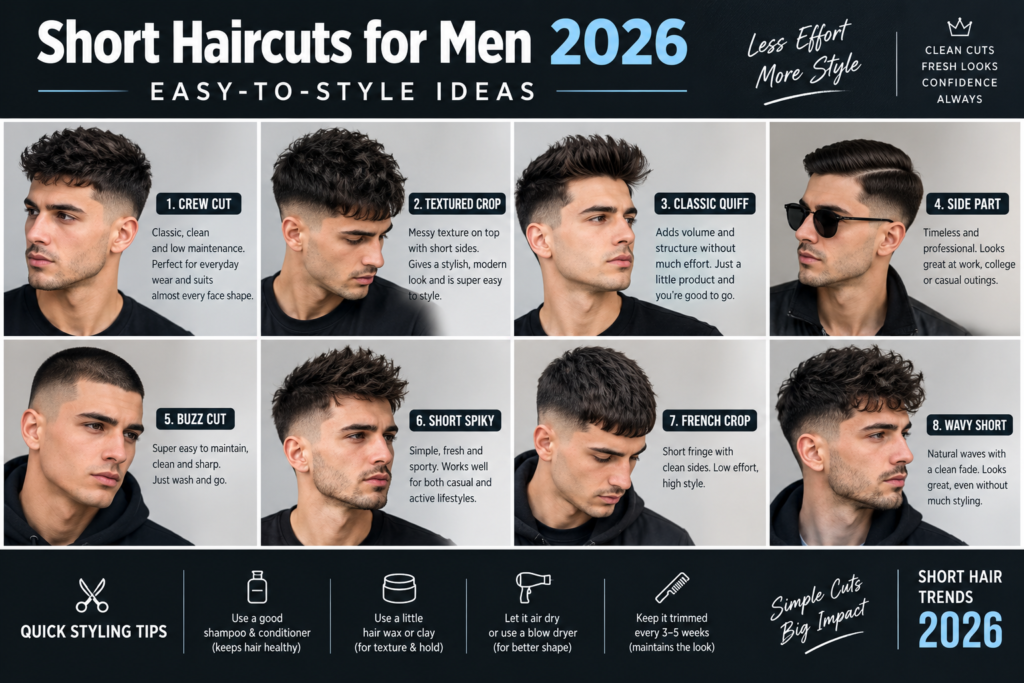
Short haircuts for men in 2026 are all about texture and natural movement. Rigid, over-gelled styles are out. A Korean mullet haircut is one of the easiest ways to get that relaxed look.
It keeps the sides tidy, adds softness on top and leaves just enough length at the back. You get personality without the messy 80s vibe.
This guide covers 14 styles, the best face shapes, barber instructions, styling steps and the mistakes to avoid.
What Is a Korean Mullet Haircut?
A Korean mullet haircut is a modern take on the classic mullet. The sides are short or tapered, the top has soft layers and a light fringe, and the back is only slightly longer.
The idea comes from K-pop and K-drama styling. The result looks polished and wearable, not dramatic.
Key features:
- Short, clean sides
- Textured, layered top
- Soft fringe or curtain bangs
- Short, controlled length at the nape
14 Best Korean Mullet Haircut Styles
Classic Korean Mullet
Short sides, a medium-length top and a subtle tail. It’s the safest starting point if this is your first Korean mullet haircut.
Textured Korean Mullet
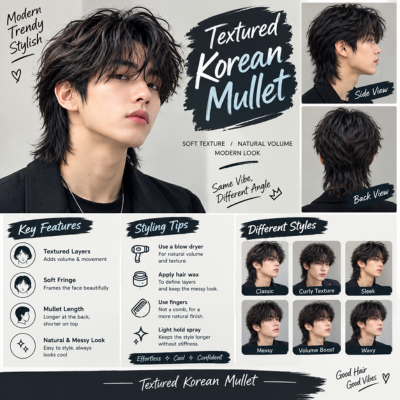
Choppy layers add volume and movement. Works well for fine or straight hair that needs body.
Korean Wolf Cut Mullet
Heavy layering gives a shaggy, rounded shape. It’s softer than a traditional wolf cut and easier to manage.
Two-Block Korean Mullet
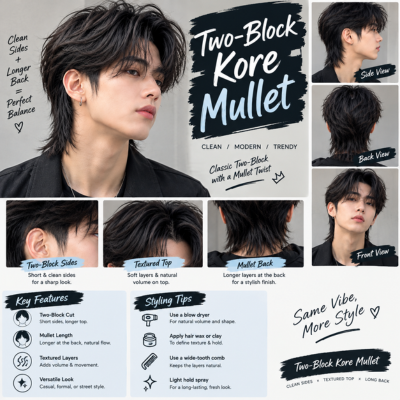
The sides and back are cut shorter than the top. This is the most popular Korean cut, adapted with a longer nape.
Curtain Bang Korean Mullet
The fringe parts down the middle and falls to each side. It frames the face and suits most hair types.
Low Taper Korean Mullet
A low taper keeps the neckline sharp. A good fit for office settings.
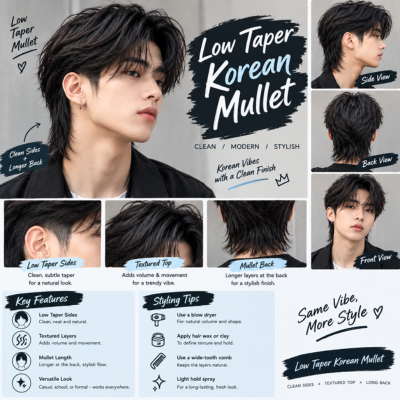
Soft Layer Korean Mullet
Blended layers with no harsh lines. It grows out gracefully, so you can stretch the time between cuts.
Curly Korean Mullet
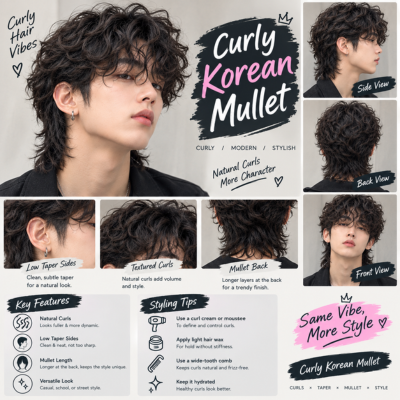
Natural curls add volume and shape on their own. Keep the sides short so the curls don’t get bulky.
Mini Korean Mullet
The shortest version, with only a hint of length at the back. Ideal if you want a subtle change.
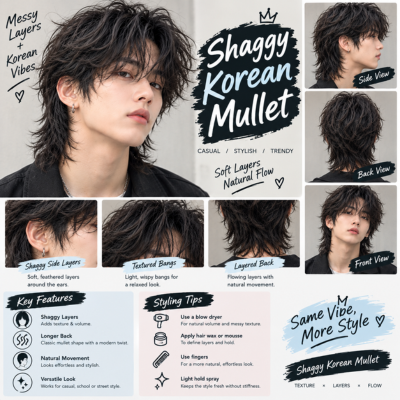
Shaggy Korean Mullet
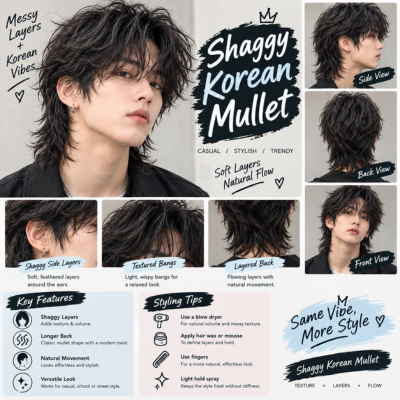
Piecey, uneven layers for a lived-in look. It needs very little styling.
Middle Part Korean Mullet
A centre part with airy, face-framing sections. It gives a clean, 90s-inspired look.
Fade Korean Mullet
A skin or mid fade on the sides contrasts with a longer top. Bold, sharp and very current.
Long Korean Mullet
More length on top and at the back, with a layered shape. It suits men who like the shaggier end of the trend.
Feathered Korean Mullet
Light, wispy ends and softly flicked layers. It looks airy and moves well.
Best Face Shapes for Korean Mullets
| Face Shape | Best Style | Why It Works |
|---|---|---|
| Oval | Almost any style | Balanced proportions suit every cut |
| Round | Textured or middle part | Adds height and lengthens the face |
| Heart | Curtain bangs or soft layers | Softens a wider forehead |
| Square | Shaggy or feathered | Breaks up strong jawlines |
Oval Face
You can wear any Korean mullet haircut. Choose based on lifestyle and hair type.
Round Face
Add volume on top and keep the sides tight. Avoid too much width around the ears.
Heart Face
Side-swept or curtain fringes balance a wide forehead and narrow chin.
Square Face
Layers and textured ends soften angular features.
How to Ask Your Barber for a Korean Mullet
Clear instructions prevent a bad cut. Bring a photo and use these points:
- Sides: Ask for a low or mid taper, or scissor-cut short sides.
- Top: Request point-cutting for texture and soft layers.
- Fringe: Say whether you want it eye-length, curtain-style or choppy.
- Back: Ask for just a few centimetres of length at the nape.
- Finish: Request thinning or texturising to remove bulk.
Tell your barber how much time you want to spend styling. A good Korean mullet haircut should take under five minutes.
How to Style a Korean Mullet
Step 1: Blow-dry the Hair
Dry the hair on medium heat. Lift the roots with your fingers and push the fringe forward.
Step 2: Apply Texture Product
Rub a pea-sized amount of product between your palms. Work it through from root to tip.
Step 3: Define the Fringe
Separate the fringe into small sections. Twist the ends for a piecey finish.
Step 4: Keep the Back Controlled
Smooth the nape with a little leftover product. This stops the tail from looking untidy.
Best Products for Korean Mullets
Sea Salt Spray
Gives a beachy, matte grip. Spray on damp hair before blow-drying.
Matte Clay
Strong hold with a flat finish. Best for defining layers and fringe.
Texture Powder
Adds instant volume at the roots. Good for fine hair.
Lightweight Hair Cream
Controls frizz and softens the ends without weighing hair down. A fit for dry or curly hair.
Korean Mullet vs Traditional Mullet
| Feature | Korean Mullet | Traditional Mullet |
|---|---|---|
| Back length | Short to medium | Long |
| Sides | Tapered or clean | Short but uneven |
| Texture | Soft, layered | Choppy, sharp |
| Look | Polished, modern | Bold, retro |
| Styling time | 3–5 minutes | 5–10 minutes |
The Korean version is subtler and works in most workplaces.
Maintenance Tips for Korean Mullets
Trim Every 4–6 Weeks
Regular trims keep the sides sharp and the shape intact.
Avoid Heavy Products
Wax and thick gel flatten layers. Stick to light, matte formulas.
Use Heat Protection
If you blow-dry daily, add a heat protectant to prevent dryness.
Maintain the Fringe
Trim the fringe between appointments so it doesn’t fall into your eyes.
Common Korean Mullet Mistakes
Excessive Back Length
Too much length makes it look like a traditional mullet. Keep the nape short.
Overusing Fades
A high skin fade can look harsh against soft layers. A taper usually blends better.
Ignoring Texture
A flat, blunt cut loses the movement that defines a Korean mullet haircut.
Skipping Daily Styling
Even a minute with a texture product makes a big difference.
Frequently Asked Questions
What makes a Korean mullet different from a regular mullet?
A Korean mullet haircut has softer layers, a shorter tail and a more polished finish. A regular mullet is longer at the back and sharper overall.
Is a Korean mullet good for straight hair?
Yes. Straight hair holds layered texture well, especially with sea salt spray or texture powder.
Can Korean mullets look professional?
Yes, if you choose a low taper, a mini length and a neat fringe. A tidy Korean mullet haircut fits most office dress codes.
How often should I trim a Korean mullet?
Every 4–6 weeks. This keeps the neckline clean and the layers balanced.
Which product works best for Korean mullets?
Matte clay is the most reliable choice. It gives hold and texture without shine.
Final Words
A Korean mullet haircut works because it is flexible. You can go short and subtle with a mini cut, or choose a shaggy, layered version if you want more attitude. Either way, the sides stay tidy and the top stays soft.
