


Thin, flat hair can feel impossible to fix — until you understand what’s actually driving it. The good news? Most people can noticeably improve hair thickness and fullness with the right combination of nutrition, scalp care, and daily habits. This guide breaks down exactly why hair thins, what genuinely works to reverse it, and how to build a routine that gives you visibly thicker, healthier hair over time.
Getting to the Root of Thinning Hair for Thicker Fuller Hair
Every strand of hair grows from a follicle, and the health of that follicle determines how thick, strong, and shiny your hair looks. When follicles shrink, become inflamed, or stop producing new strands at a normal rate, hair starts to look sparse — even if you aren’t technically losing large amounts of hair.
Thinning hair isn’t always about hair loss. Sometimes it’s about hair quality — strands growing back finer and weaker with each cycle. That’s why a real fix starts with identifying the root cause rather than just buying the first “volumizing” product you see.
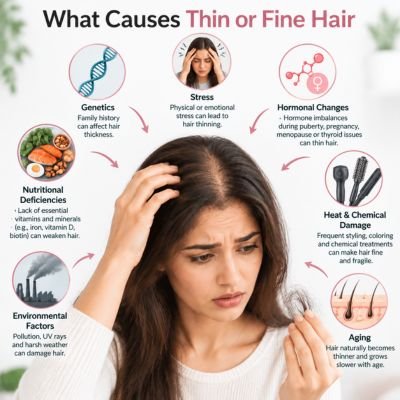
What Causes Thin or Fine Hair

Several factors can contribute to thin or fine hair, often working together rather than alone.
| Cause | How It Affects Hair |
|---|---|
| Genetics (pattern hair loss) | Follicles gradually shrink, producing finer strands over time |
| Hormonal changes | Pregnancy, menopause, and thyroid issues disrupt growth cycles |
| Nutritional deficiencies | Low iron, protein, biotin, or zinc weakens hair structure |
| Stress | Can push hair into a “resting” phase, increasing shedding |
| Heat and chemical damage | Weakens the hair shaft, causing breakage and thinning |
| Poor scalp health | Clogged follicles and inflammation restrict healthy growth |
| Harsh hair care habits | Tight hairstyles and over-brushing cause traction and breakage |
Identifying which of these applies to you makes it much easier to choose the right treatment approach instead of guessing.
Natural Ways to Get Thicker Hair
Before reaching for expensive treatments, these natural strategies can make a real difference in hair thickness and density.
1. Prioritize Protein and Key Nutrients
Hair is made almost entirely of a protein called keratin. Without enough protein, iron, zinc, biotin, and omega-3 fatty acids, hair grows thinner and weaker. Add eggs, fish, leafy greens, nuts, and lean meats to your diet consistently.
also read hair guide on Hairlixa.com
2. Massage Your Scalp Daily
Scalp massage increases blood circulation to hair follicles, which may support thicker growth over time. Spend 4–5 minutes massaging your scalp with your fingertips each day, ideally while applying a nourishing oil.
3. Use Natural Oils Strategically
- Castor oil – rich in ricinoleic acid, may support scalp circulation
- Rosemary oil – studied for stimulating hair growth similarly to mild treatments
- Coconut oil – penetrates the hair shaft and reduces protein loss
- Argan oil – adds shine and reduces breakage from dryness
4. Avoid Heat and Chemical Overload
Excessive blow-drying, straightening, and coloring weaken the hair shaft, leading to breakage that makes hair appear thinner. Limit heat styling and use a heat protectant whenever you do.
5. Stay Hydrated and Manage Stress
Dehydration and chronic stress both disrupt the natural hair growth cycle. Drinking enough water and managing stress through sleep, exercise, or mindfulness supports healthier regrowth.
6. Try Gentle Microneedling (Derma Rolling)
Weekly use of a fine derma roller (0.5–1.5mm) can create micro-injuries that trigger the scalp’s natural healing response, potentially improving thickness when paired with consistent care. Always sterilize the roller before and after use.
Hair Care Tips for Men and Women
While the underlying biology of hair growth is similar, hair thinning tends to show up differently in men and women, so the most effective routines aren’t always identical.
For Women
- Use a volumizing, sulfate-free shampoo to avoid stripping natural oils
- Apply a lightweight leave-in conditioner instead of heavy creams that weigh hair down
- Avoid tight ponytails and buns that pull on the hairline (traction alopecia)
- Consider hormone-related causes if thinning appears around menopause or postpartum
- Get regular trims to prevent split ends from making hair look thinner
For Men
- Watch for early signs of a receding hairline or crown thinning — early action works best
- Use a targeted scalp serum with proven ingredients like minoxidil if thinning is genetic
- Keep hair shorter during active thinning phases; short cuts make thin hair less noticeable
- Avoid daily shampooing with harsh, stripping formulas
- Manage testosterone-related shedding through a dermatologist if it runs in the family
How to Get Thick Hair in 1 Week
A full transformation in seven days isn’t realistic — hair grows in cycles that take months. However, you can make hair look noticeably thicker and fuller within a week using these quick wins:
- Deep condition once with a protein-based mask to plump up each strand
- Trim split ends so hair looks healthier and less stringy
- Switch to a volumizing shampoo and conditioner
- Blow-dry upside down to add root lift and instant volume
- Use a texturizing spray at the roots for extra body
- Massage the scalp daily to boost circulation
- Sleep on a silk pillowcase to reduce breakage and frizz overnight
These steps improve the appearance of thickness quickly while supporting the biological changes that take longer to show.
How to Get Thick Hair in a Month
A month is enough time to start seeing real, measurable improvement if you stay consistent.
| Week | Focus | Action Steps |
|---|---|---|
| Week 1 | Foundation | Switch to a gentle, volumizing routine; start scalp massage |
| Week 2 | Nutrition | Add protein, iron, and biotin-rich foods; consider a hair supplement |
| Week 3 | Treatment | Begin using oils or a growth serum consistently; try microneedling once weekly |
| Week 4 | Maintenance | Reduce heat styling, get a trim, and track visible changes |
Consistency matters more than intensity. Skipping days or switching products too often resets progress and makes it harder to tell what’s actually working.
Common Mistakes That Make Hair Look Thinner
- Washing hair too often, which strips natural oils and causes overproduction of oil
- Using heavy conditioners on fine hair, which flattens strands
- Skipping regular trims, allowing damage to travel up the hair shaft
- Relying only on external products while ignoring diet and stress
- Expecting overnight results and giving up too soon
When to See a Professional
If thinning is sudden, patchy, or accompanied by scalp pain, redness, or excessive shedding (more than 100–150 strands a day), it’s worth consulting a dermatologist or trichologist. They can identify underlying causes like thyroid imbalances, iron deficiency, or early-stage pattern hair loss and recommend targeted treatment.
Frequently Asked Questions
Can thin hair become thick again naturally?
Yes, in many cases. If thinning is caused by diet, stress, or damage rather than genetics, improving nutrition and scalp care can restore noticeable thickness over a few months.
Does cutting hair make it grow thicker?
No, trimming doesn’t change how hair grows from the follicle, but it removes split ends that make hair appear thinner and more damaged.
What vitamins help with hair thickness?
Biotin, vitamin D, iron, zinc, and omega-3 fatty acids are among the most important nutrients for supporting thicker, healthier hair growth.
Is scalp massage really effective for hair growth?
Studies suggest consistent scalp massage can improve blood flow to follicles, which may support thickness, though results vary and it works best alongside other habits.
How long does it take to see results from a new hair care routine?
Most people notice softer, less breakage-prone hair within a few weeks, while true thickness changes typically take 3 to 6 months of consistency.
Can stress really cause hair thinning?
Yes, chronic stress can push more hair follicles into a resting phase, leading to noticeable shedding and thinning within a few months.
Final Thoughts
Thicker, fuller, and healthier hair isn’t about one miracle product — it’s the result of consistent, informed care that addresses nutrition, scalp health, and daily habits together. Start with small, sustainable changes, track your progress over weeks rather than days, and don’t hesitate to consult a specialist if thinning feels sudden or severe. With patience and the right routine, visibly healthier hair is well within reach.
